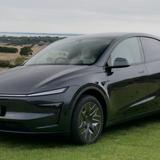
BYD ATTO 1 Battery Cooling Confirmed: Why the "Essential" Isn't Just Air-Cooled
BYD confirms all ATTO 1 variants, including the base Essential, feature active refrigerant cooling to handle the harsh Australian heat.


The mystery surrounding the BYD ATTO 1’s battery cooling for the Australian market has finally been resolved, putting an end to months of conflicting reports.
While speculation had been mounting across online forums that only the flagship Premium variant would receive active cooling, leaving the entry-level Essential trim to rely on passive air cooling - a setup that has historically struggled in our climate - a BYD spokesperson has confirmed that both variants utilise an active refrigerant-based system.
Car finance or novated leasing could save you thousands
Get a free, no-obligation quote from our finance partner, Loan Options — for straightforward car finance, or package this car through your salary with a novated lease.
Specifically, all Australian and New Zealand units employ R1234yf refrigerant, which is directed through specialised lines to the high-voltage battery pack to maintain optimal operating temperatures.
This "Direct Refrigerant Cooling" method differs from the traditional liquid-glycol loops found in more expensive EVs by removing the secondary water circuit and chilling the battery plates directly with the car’s AC compressor.
This technical distinction explains why some may have previously claimed the car has "no liquid cooling," as it lacks the traditional water pump and external coolant tank dedicated to the battery.
In reality, the system is highly active across the entire range, allowing even the most affordable variant to effectively "refrigerate" its cells to maintain performance and longevity when the mercury rises.
This shared thermal architecture ensures that the Essential’s 30kWh battery and the Premium’s 43.2kWh pack are both protected by the same e-Platform 3.0 safeguards found in BYD’s larger models.
For Australian drivers, this confirmation means the ATTO 1 is well-equipped to handle thermal stress during DC fast charging and intense heatwaves.
By utilising the car's air conditioning system to proactively manage cell temperatures, both the 30kWh and 43.2kWh models avoid the rapid battery degradation and throttled charging speeds that plagued older, air-cooled electric cars.
This is critical for maintaining the ATTO 1’s charging performance, which sees the Essential peak at 65kW and the Premium at 85kW, allowing both to top up from 10 to 80 per cent in approximately 30 minutes.
Beyond cooling, the ATTO 1 offers a surprising level of utility for the price, including Vehicle-to-Load (V2L) functionality that allows the car to act as a mobile power bank for electrical appliances.
While the Essential is geared toward city commuting with a 220km WLTP range and a 65kW motor, the Premium offers a more versatile 310km range and a more potent 115kW output.
Regardless of the trim chosen, owners are covered by BYD's standard Australian warranty, which includes a six-year or 150,000km vehicle warranty and a dedicated eight-year or 160,000km battery warranty.
Interested in the BYD ATTO 1?
Browse all available variants, compare specifications, and get the best price with CarSauce Buy.
Yes. BYD has confirmed that both the Essential and Premium variants use the same active direct refrigerant cooling system. There is no "passive-only" model in the Australian ATTO 1 line-up.
The Essential features a 30kWh battery with a 220km WLTP range, while the Premium uses a larger 43.2kWh battery providing up to 310km (WLTP). For strictly urban driving, these figures can increase significantly due to regenerative braking.
The Essential variant supports DC fast charging up to 65kW, while the Premium variant reaches 85kW. Both models are designed to charge from 10% to 80% in roughly 30 minutes.
The Blade Battery is BYD’s proprietary Lithium Iron Phosphate (LFP) technology. It is famous for passing the "nail penetration test" without catching fire or exploding, making it one of the safest and most thermally stable battery chemistries available.